Robusta green coffee defects: how SNI grades are counted
The 20 defect types, the value each one adds, and how the total sets the grade.
By IndokofeePublished 6 min read
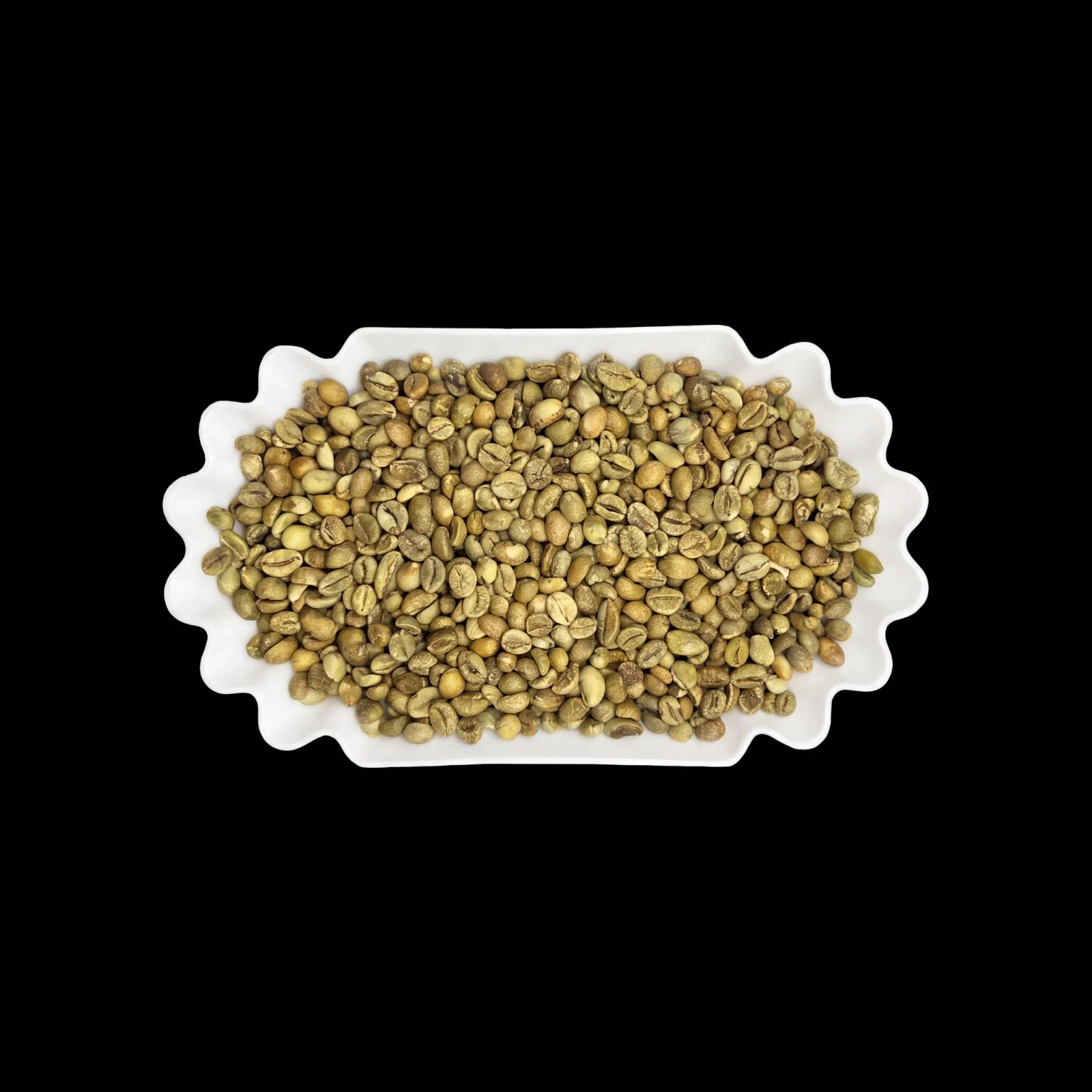
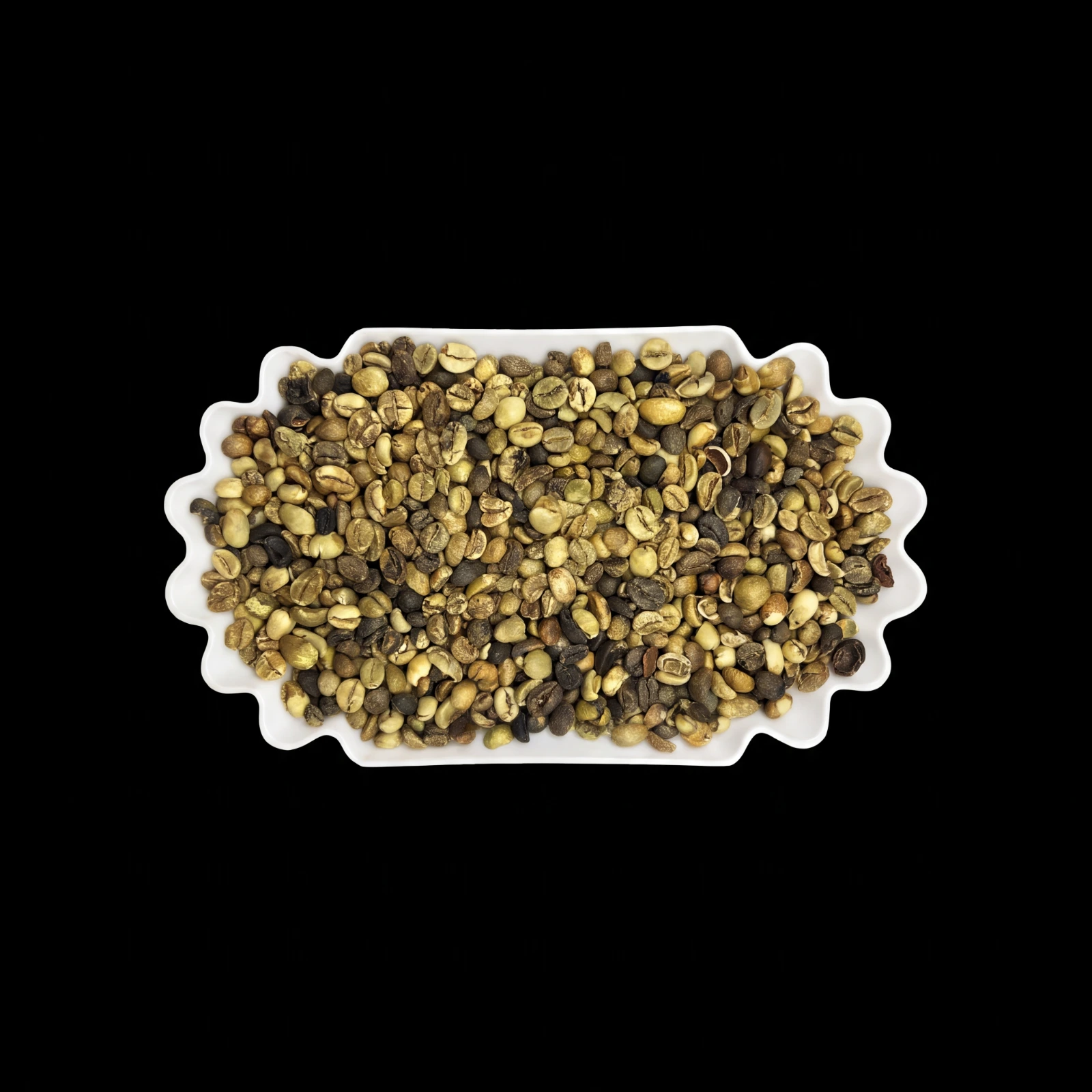
Indonesian robusta is graded by counting defects. Under the national standard SNI 01-2907-2008, a grader takes a 300 g sample, picks out every defective bean and every piece of foreign matter, and adds up their defect values. The total sets the grade, from Grade 1 to Grade 6. This guide lists the 20 defect types, the value each one carries, and how to use them when you specify a lot.
Contents
How defect counting works
Before grading, a lot must meet the standard's general requirements: no live insects, no foul or moldy smell, moisture of no more than 12.5% and foreign matter of no more than 0.5% by weight. The grader then takes a 300 g sample, picks out each defective bean and each piece of foreign matter, and sorts them by type. Each type has a fixed defect value (nilai cacat on Indonesian reports). The number found of each type is multiplied by its value, and the results are added up.
When one bean has more than one defect, only the highest value counts. A broken black bean with an insect hole, for example, counts once, at 0.5.
The 20 defect types and their values
The values below are set by SNI 01-2907-2008. Under each defect is the term used in the standard and on Indonesian lab reports. Sizes are measured against a whole bean, husk or piece of parchment.
| Defect | Description | Defect value |
|---|---|---|
| Black beanbiji hitam | Half or more of the outer surface is black, shiny or shriveled | 1 |
| Partly black beanbiji hitam sebagian | Less than half of the surface is black, or one bluish-black spot | 0.5 |
| Broken black beanbiji hitam pecah | A black bean that is ¾ of a whole bean or less, or a broken partly black bean | 0.5 |
| Dried cherrykopi gelondong | Dried fruit still in its husk, whole or at least ¾ of a whole | 1 |
| Brown beanbiji coklat | Half or more of the surface is brown, darker than the rest of the lot; a broken brown bean counts as a broken bean | 0.25 |
| Large huskkulit kopi ukuran besar | More than ¾ of a whole husk | 1 |
| Medium huskkulit kopi ukuran sedang | ½ to ¾ of a whole husk | 0.5 |
| Small huskkulit kopi ukuran kecil | Less than ½ of a whole husk | 0.2 |
| Bean in parchmentbiji berkulit tanduk | A bean still enclosed in its parchment skin | 0.5 |
| Large parchmentkulit tanduk ukuran besar | A loose piece of parchment, more than ¾ of a whole | 0.5 |
| Medium parchmentkulit tanduk ukuran sedang | ½ to ¾ of a whole | 0.2 |
| Small parchmentkulit tanduk ukuran kecil | Less than ½ of a whole | 0.1 |
| Broken beanbiji pecah | ¾ of a whole bean or less | 0.2 |
| Immature beanbiji muda | Small, with a wrinkled surface all over | 0.2 |
| Bean with one insect holebiji berlubang satu | Insect damage, a single hole | 0.1 |
| Bean with more than one insect holebiji berlubang lebih dari satu | Insect damage, two or more holes | 0.2 |
| Spotted beanbiji bertutul-tutul | Counted in wet-processed coffee only | 0.1 |
| Large twig, soil or stoneranting, tanah atau batu berukuran besar | Over 10 mm | 5 |
| Medium twig, soil or stoneranting, tanah atau batu berukuran sedang | 5 to 10 mm | 2 |
| Small twig, soil or stoneranting, tanah atau batu berukuran kecil | Under 5 mm | 1 |
From total defect value to grade
The total defect value per 300 g places the lot in one of seven grades, called mutu on Indonesian reports: Grade 1 up to 11, Grade 2 from 12 to 25, Grade 3 from 26 to 44, Grade 4a from 45 to 60, Grade 4b from 61 to 80, Grade 5 from 81 to 150 and Grade 6 from 151 to 225. Grade 4 is split into 4a and 4b for robusta only. A total above 225 falls outside the scale and meets no SNI grade. Our coffee shows the category each grade is offered in.
A worked example
A 300 g sample of natural robusta contains the defects below.
| Defect | Found | Value | Total |
|---|---|---|---|
| Black beans | 5 | 1 | 5 |
| Partly black beans | 6 | 0.5 | 3 |
| Broken beans | 20 | 0.2 | 4 |
| Brown beans | 10 | 0.25 | 2.5 |
| Beans with one insect hole | 6 | 0.1 | 0.6 |
| Small stone | 1 | 1 | 1 |
| Total defect value | 16.1 | ||
The total of 16.1 falls between 12 and 25, so the sample is Grade 2. Foreign matter weighs heavily: one large stone would add 5 on its own, as much as five black beans.
Put defect limits in your contract
A grade sets a ceiling on the total, not on any one defect. A sample with 100 broken beans and a sample with 20 black beans both total 20, and both are Grade 2. If particular defects matter to your process, such as black beans or stones, state a maximum for each in the contract alongside the grade, screen size and moisture, and check them on the pre-shipment sample.
Frequently asked questions
How many defects are allowed in Grade 1 coffee?
Grade 1 allows a total defect value of up to 11 in a 300 g sample. Because each defect carries its own value, that could mean 11 black beans or 55 broken beans, so the number of defective beans in a Grade 1 lot varies.
What is the difference between Grade 4a and Grade 4b?
Both are robusta grades. Grade 4a covers a total defect value of 45 to 60 per 300 g, and Grade 4b covers 61 to 80. In the Sumatran trade they are often sold as EK-1 60 and EK-1 80.
Does the SNI grade include bean size or moisture?
No. The grade measures defects only. Bean size is set separately by screen, and moisture of no more than 12.5% is a general requirement a lot must meet before it is graded.
Who counts the defects?
The exporter grades each lot, and many buyers also ask for an independent inspection or a Certificate of Analysis from a lab on the pre-shipment sample. Agree in the contract who counts the defects and on which sample.

How Indokofee grades its lots
Indokofee defect-counts every lot to SNI 01-2907-2008 and to the limits in your contract: EK-1 in Grades 1 to 5, ELB in Grades 2 to 3 and triage at Grade 6. All lots are natural processed, with moisture of no more than 12.5%. A Certificate of Analysis from an independent lab, covering moisture, grade and screen, is available on request.