How to choose an Indonesian robusta green coffee supplier
A 10-point checklist for sourcing robusta green coffee from Indonesia
By IndokofeePublished 4 min read
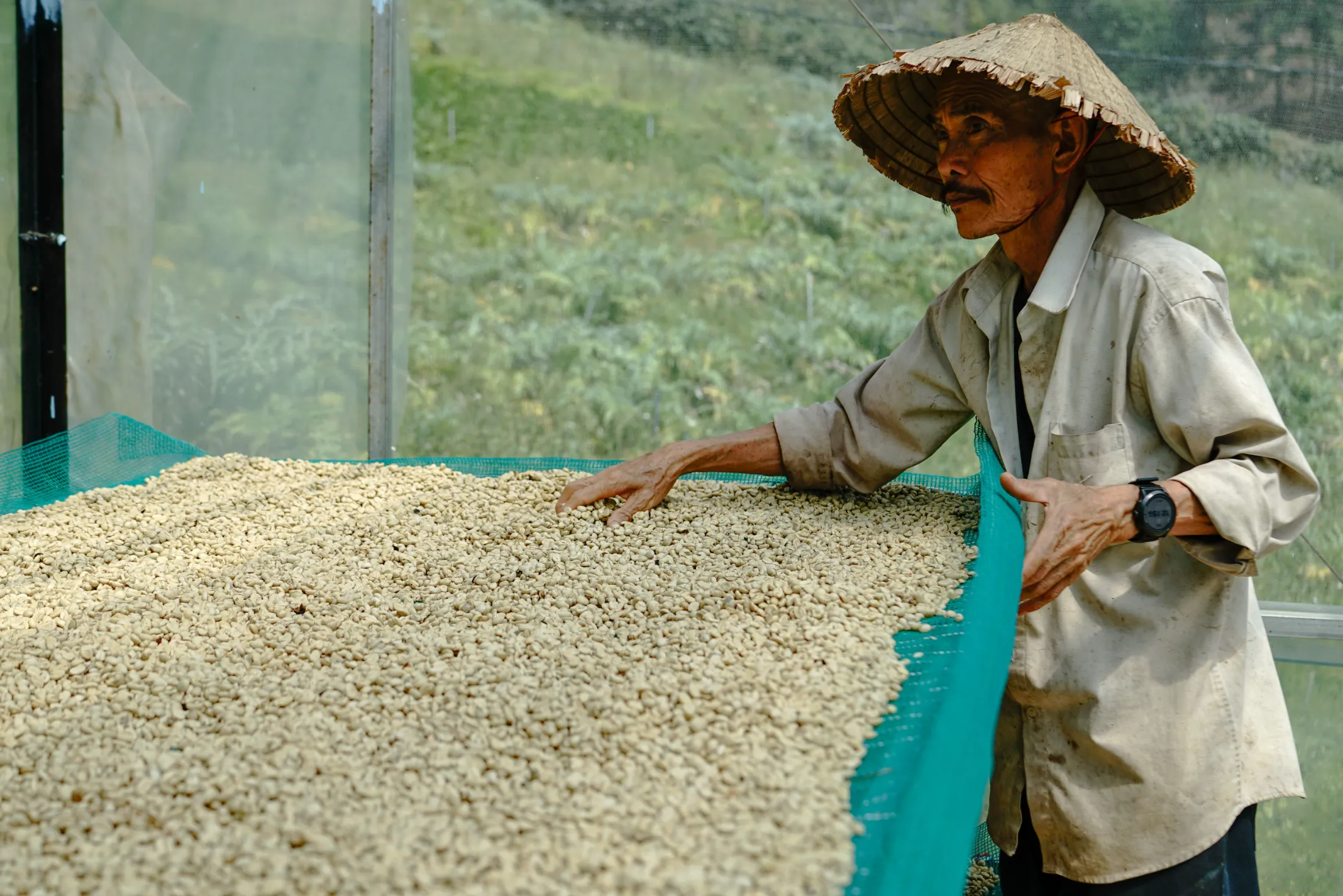
Indonesia is one of the world's leading robusta producers, and southern Sumatra is its heartland: South Sumatra, Lampung and Bengkulu together grow about 69% of the country's smallholder robusta (Indonesian Ministry of Agriculture, Outlook Kopi 2022). With many exporters offering similar-looking lots, these are the questions that separate a reliable robusta green coffee supplier from a risky one, whether you are buying your first container or adding a second origin.
Contents
Specify the grade: SNI defect count, screen size and moisture
Indonesian export robusta is graded by defect count under the national standard SNI 01-2907-2008, measured on a 300 g sample, from Grade 1 (up to 11 defects) to Grade 6 (151 to 225 defects). Bean size is a separate measure: larger, more uniform beans suit premium programs, standard screens suit espresso blends, and triage suits soluble coffee. Trade names such as EK-1 and ELB are used differently by different exporters, so ask for the screen size, defect count, moisture and bean count to be written into the contract, not just a grade label.
Check traceability back to the farmer group
A good supplier can tell you which farmer group, village collector or district a lot came from, and show the records. Traceability supports consistent quality and, for buyers in the EU, the due diligence that EUDR requires (see section 8).
Ask how each lot is sorted, graded and inspected
Ask whether the supplier sorts, screens and defect-counts each lot itself, and whether moisture is checked before shipment. Ask for a pre-shipment sample and, where needed, an independent laboratory analysis or pre-shipment inspection. If an offer only says "as per sample" without stating specifications, you have little to rely on if the shipment differs.
Confirm residue and food safety testing
Many markets set limits for ochratoxin A and for pesticide residues such as glyphosate. Ask which tests the supplier can arrange for each lot, who carries them out, and whether a Certificate of Analysis comes with the shipment.
Make sure the export documents are complete
A complete export file normally includes a commercial invoice, packing list, export declaration, bill of lading or air waybill, certificate of origin and phytosanitary certificate, plus fumigation and analysis certificates where required. Missing paperwork can hold a container at the destination port.
Compare minimum orders, packing and Incoterms (FOB, CFR, CIF)
Sea shipments are usually priced per full container load (FCL). One container holds about 19.2 MT in 320 bags of 60 kg. Ask about smaller trial lots by air, packing options (jute, jute with a GrainPro liner, bulk) and the Incoterm:
| Term | What it means |
|---|---|
| FOB | You arrange and pay the ocean freight. |
| CFR | The supplier pays freight to your port. |
| CIF | The supplier pays freight and insures the cargo to your port. |
Time your purchase with the Sumatra robusta harvest
In southern Sumatra, the main robusta crop is harvested from March to October, with the peak from June to September. Exporters ship year-round from stock, but contracting ahead of the main crop gives you the widest choice of new-crop lots.
EU importers: prepare for EUDR
The EU Deforestation Regulation (Regulation (EU) 2023/1115, as amended by Regulation (EU) 2025/2650) applies from December 30, 2026 to medium and large operators placing coffee on the EU market, and from June 30, 2027 to micro and small operators. Importers must file a due diligence statement showing that the coffee was produced legally, on land not deforested after December 31, 2020, including the geolocation of the plots where it was grown. Ask your supplier whether it can provide plot-level geolocation for each lot in time for your filing.
Protect your payments from bank-detail fraud
Payment fraud through fake bank details is common in commodity trade. Agree bank details in the signed contract, and confirm any change by phone with a known contact before paying.
Approve a sample prepared to your specification
Before contracting, ask for a sample prepared to your specification rather than a generic offer sample, and cup it alongside your current origin.
Supplier checklist: 10 questions to ask before you buy
- Which grade, screen size, defect count, moisture and bean count will the contract state?
- Which district and farmer group does this lot come from?
- Who sorts, grades and inspects the lot before shipment?
- Which residue tests can you arrange, and will a Certificate of Analysis be included?
- Which export documents come with the shipment?
- What is the minimum order, and which Incoterms do you quote?
- When is the next crop available?
- For EU imports: can you supply plot geolocation for EUDR?
- How do you confirm bank details?
- Can you send a sample prepared to my specification?

How Indokofee supplies Indonesian robusta
Indokofee has supplied green robusta from Lampung, South Sumatra, Bengkulu and Jambi since 2016: more than 3,000 container loads so far, with 85% of volume from repeat buyers and an annual capacity of 20,000 MT. Every lot is sorted, screened and defect-counted to SNI 01-2907-2008 and your contract. All lots ship at a maximum of 12.5% moisture. Lab testing for pesticide residues and ochratoxin A is arranged as the buyer requires, and we prepare the export documents. Sea freight is quoted FOB, CFR or CIF from Indonesia; contact us for sea and air freight minimums.